Worditaire: Word Solitaire
- 4.4
- Rating
- 100.00K
- Installs
- Free
- Price
 Analysis by App-foxy
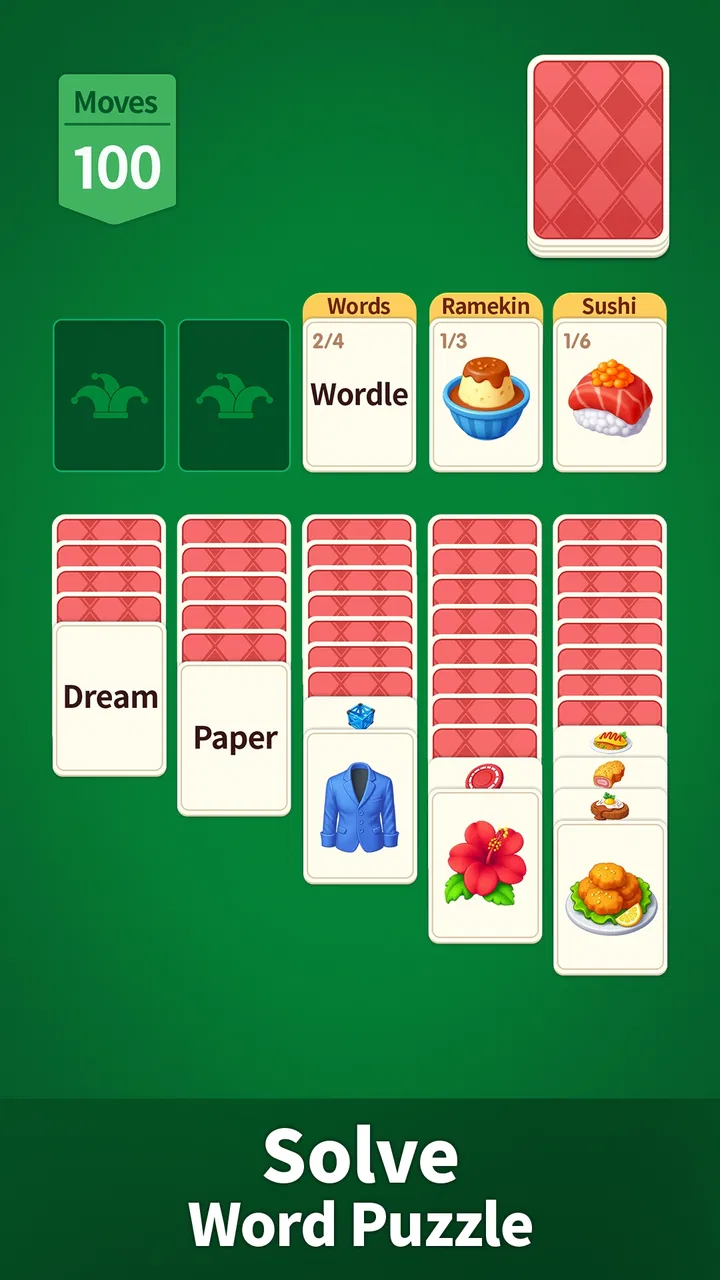
I spent time with Worditaire: Word Solitaire as a quiet card game built around words rather than traditional suits and numbers. Its basic appeal is easy to understand: it combines the familiar pace of solitaire with the satisfaction of finding useful letter combinations. That makes it a natural fit for short breaks, relaxed evening play, or anyone who enjoys word puzzles but does not always want a demanding crossword.
The game comes from Speedgo and is listed as a free title in the card category. It has an average rating of 4.2 from around a thousand ratings, with more than fifty thousand installs. Those figures suggest that it has found a modest audience without pretending to be a huge multiplayer platform. I approached it as a personal, low-pressure puzzle rather than as a competitive card experience, and that is the lens through which it works best.
How the word-and-card format feels in everyday play
The clever part of the concept is that the cards are not merely obstacles between turns. The letters give each move a language angle, so I found myself switching between two kinds of thinking: first looking at the available layout as a solitaire player, then searching for a word that makes the move worthwhile. That small change keeps the familiar card format from feeling completely automatic.
You May Also Like

 Pandora - Music & Podcasts
Pandora’s Music Is Easy to Start, but Harder to Recover
Pandora’s strength is its low-effort path from a seed to a station. Its weak spot is how much confidence it asks you to place in connection, setup, and quiet recovery.

 8 Ball Pool
 Is Built on Rivalries, Rematches, and Routine
A close look at the rivalries, rematches, shared routines, and unanswered safety questions that turn a quick pool match into a persistent mobile community.

 Samsung Music
’s Quiet Strength Is Playing What You Already Own
Its reach comes less from spectacle than from dependable access to a personal library. That simplicity is both the app’s strongest retention engine and its ceiling.

 AccuWeather: Weather Radar
AccuWeather Review: A Quick, Clear Forecast for Everyday Decisions
For everyday plans, the best forecast is the one you can understand quickly. AccuWeather makes rain timing, radar, and local conditions easy to act on, with a few trade-offs.

 Hill Climb Racing
Why Hill Climb Racing Still Turns Crashes Into One More Run
A tiny car, a bumpy hill and one more upgrade: Hill Climb Racing keeps resurfacing because its simple chaos makes every near-miss feel personal.

 AliExpress - Shopping App
AliExpress Makes Global Shopping Feel Personal, but Shoppers Bear the Risk
AliExpress turns a global marketplace into a pocket-sized discovery engine. Its reach is useful, its shopping loop compelling, and its trade-offs easy to miss.
More From Our News Desk
View All News


It is also why the game feels different from a standard solitaire app. In ordinary solitaire, I tend to focus on sequence, color, and exposing hidden cards. Here, the mental rhythm is more verbal. I pay attention to short words, possible extensions, and whether using a letter now will leave a better route later. Even when the session is simple, the word layer gives the decision a little more personality.
I would describe the pace as relaxing rather than intense. This is not the kind of game I would open when I want a dramatic challenge or a fast reaction test. It suits the moments when I have a few minutes and want something that occupies my attention without demanding complete concentration. A short session can feel complete, while a longer one remains comfortable because the game does not rely on frantic timing.
A realistic use case is a commute or a waiting room. I can start a round, examine the letters, and make progress without needing sound, a second player, or a large uninterrupted block of time. It also fits well after work, when a competitive game would feel tiring but doing nothing would be less satisfying. The word element gives me just enough mental activity to feel engaged.
What makes the format more thoughtful than it first appears
The main strategy is not simply to choose the longest word available. A shorter word can be more useful if it clears a troublesome card or opens a better position. That is an important distinction for new players: chasing impressive vocabulary may be less effective than preserving flexibility. I got better results when I considered the next two possible moves instead of treating every available word as an isolated reward.
Another useful habit is to scan the board in two passes. On the first pass, I look for obvious words and cards that can be exposed. On the second, I check whether a tempting move consumes a letter that could connect several other cards. This approach makes the game feel less random and reduces the urge to play the first acceptable word I notice.
The format can also work as a gentle vocabulary exercise, although I would not mistake it for a structured language-learning tool. It encourages recognition and recall, but the experience is still primarily a game. Players who enjoy word association may appreciate that extra layer; players looking for definitions, pronunciation guidance, or lessons should choose a dedicated learning app instead.
Free access and what the purchase range means
The important starting point is that the game is free to download and play. That makes it easy to test without committing money first, which is especially useful here because the word-solitaire combination will not appeal equally to every card-game fan. I would install it, play several sessions, and decide whether the pace suits me before considering any optional spending.
In-app purchases are listed from $1.99 to $99.99 per item. I treat that range as a reason to be deliberate, not as a reason to dismiss the game automatically. The free entry provides the central value proposition: you can discover whether the basic loop is enjoyable without buying the app outright. Any paid value depends on what the individual purchase offers and whether it improves something I personally use often.
For me, a sensible rule is to avoid paying simply because I have played for a long time. Time spent is not proof that a purchase is worthwhile. I would only consider spending if a specific optional item solved a recurring annoyance or added value I could identify clearly. If I am happy with occasional short sessions, the free version is likely enough for my needs.
This is also where the game differs from a paid, traditional solitaire alternative. A one-time paid app can feel cleaner for someone who wants a predictable purchase and a straightforward card experience. Worditaire is more attractive to a cautious player who wants to sample a different format first. The trade-off is that free access with optional purchases requires more attention to personal spending boundaries.
Where it delivers genuine value
The strongest value is variety within a familiar structure. I do not need to learn a completely new genre, yet I am not repeating the exact routine of classic solitaire. The letters make ordinary board choices feel more expressive, and that helps the game remain approachable for people who like cards but want a puzzle element.
It is particularly useful as a low-commitment break. I can play while waiting for an appointment, during a short pause between tasks, or before bed when I want something calmer than an action game. The game gives me a clear activity with a beginning and an end, rather than an endless feed that encourages passive scrolling.
There is value in the mental shift as well. Solitaire usually rewards visual planning, while word puzzles reward language recognition. Combining the two means I am not relying on only one type of attention. When I get stuck, I can reconsider the card order or rethink the possible word, which gives me more than one way to approach a difficult position.
That flexibility is one of the less obvious strengths. A player who is not especially fast at standard card games may still enjoy the word angle, while a strong word-game player may appreciate the added spatial constraint. The game does not need to be the best solitaire app or the best word puzzle app in isolation to be worthwhile; its appeal comes from the overlap.
The trade-offs I noticed before recommending it
The same hybrid design that makes the game distinctive may frustrate specialists. If I want pure solitaire, the word layer can feel like an interruption. If I want a deep word puzzle, the card structure may feel restrictive. The game occupies the middle ground, and middle ground is useful only when that combination matches the player’s taste.
It is also not the right choice for someone seeking a social card game. I would not install it expecting live opponents, team play, or a conversation around each move. Its appeal is solitary concentration. That is ideal for private downtime, but it will not replace a multiplayer card app when interaction is the main reason I play.
Players who need a highly demanding challenge may outgrow the relaxed format. The game is better at creating a pleasant routine than at delivering tournament-style pressure. For a serious crossword enthusiast, a dedicated crossword or anagram title may offer more depth. For a classic solitaire enthusiast, a focused Klondike-style app may provide clearer rules and more familiar planning.
The purchase range is another practical trade-off. Because optional items can reach $99.99 per item, I would review each purchase carefully and use device-level spending controls if the game is being played by a child. The content rating is Everyone, which makes the title broadly accessible, but an age rating does not remove the need for sensible purchase supervision.
I also would not confuse the game’s relaxing presentation with guaranteed effortless play. Word choices can still create moments of hesitation, and the card arrangement can make a seemingly obvious move less useful than it appears. That is a positive if I want light strategy, but it may disappoint someone who wants a completely passive game.
Small techniques that improve the experience
My first practical tip is to value board access over word length. If a modest word exposes a card that changes several later options, it may be stronger than a longer word that leaves the layout closed. This is the kind of decision that turns the game from casual word spotting into actual planning.
Second, I try not to spend every flexible letter immediately. Keeping one useful letter available can preserve several routes, especially when the visible choices look similar. I found that pausing for a moment before committing is more productive than rapidly clearing whatever can be cleared first.
Third, I use the game differently depending on my energy. When I am tired, I accept short, obvious words and treat the session as a wind-down. When I want more engagement, I search for moves that improve the next position rather than merely completing the current one. That adjustable difficulty is not a formal setting; it comes from how carefully I choose to play.
A fourth tip is to stop after a frustrating run instead of trying to force a win. Because the game is designed for relaxed play, continuing while distracted can make the experience feel repetitive. A brief break often works better than turning a calm puzzle into a personal contest.
Compatibility, audience, and practical expectations
The current version is 1.13.245, and it supports devices running Android 7.0 or later. That gives the game a reasonably broad Android audience, including people using older compatible phones. I would still check the device’s available storage and store compatibility before installing, particularly on an older handset, but the stated operating-system requirement is not especially demanding.
The Everyone content rating makes it suitable for a broad age range from a content perspective. I think it is most rewarding for people who already enjoy either casual solitaire or word games and want a softer combination of the two. It can also be a good first step for someone who finds traditional word puzzles intimidating because the card structure gives the session a visible framework.
I would skip it if my priority were competitive rankings, rich social features, or a substantial educational vocabulary course. I would also skip it if I disliked games that blend categories. The title’s identity depends on that blend, so there is no reason to choose it hoping it will behave exactly like a conventional solitaire game.
Compared with free solitaire collections, this game offers a more distinctive reason to return: the letters change how I evaluate the board. Compared with dedicated word games, it offers a more concrete layout and a slower, less abstract route to progress. Compared with paid premium card apps, it is easier to try but requires more care around optional spending. Those are meaningful differences, not just cosmetic variations.
My recommendation after weighing the value
I recommend giving Worditaire a try if you want a free, quiet card game with a genuine word-puzzle twist. The download cost is not a barrier, the age rating keeps it broadly approachable, and the format is flexible enough for both brief breaks and longer relaxed sessions. Its best quality is that it gives familiar solitaire decisions a language-based reason to pause and think.
I would not recommend paying automatically, because the free starting point is enough to judge whether the central loop fits your habits. If you play regularly and can identify a specific benefit in an optional purchase, spending may make sense for you. If you only open it occasionally, keeping it free is the more sensible value choice, especially given the wide purchase range.
My final verdict is a qualified yes. Speedgo has made a pleasant niche game for players who want cards and words in the same session, not a replacement for every solitaire or puzzle alternative. I would choose it for calm solo downtime, thoughtful short rounds, and a little vocabulary-driven variety. I would choose something else for competition, deep word study, or a strictly traditional card experience.
Best suited to relaxed players who enjoy making careful word choices inside a solitaire-style layout. That specific audience is where the game earns its place, and the free access makes discovering whether you belong to it pleasantly low-risk.
FAQs for Worditaire: Word Solitaire
01What is Worditaire: Word Solitaire?
Worditaire: Word Solitaire is a unique mobile game that combines elements of classic solitaire with word puzzle challenges. Players must create words using a deck of lettered cards, strategically arranging them to complete levels. It’s perfect for those who enjoy exercising their vocabulary and strategic thinking skills.
02Is Worditaire: Word Solitaire free to play?
Yes, Worditaire: Word Solitaire is free to download and play. However, it offers in-app purchases for players who wish to enhance their gaming experience. These purchases might include additional hints, extra levels, or customization options for your solitaire deck.
03What are the main features of Worditaire: Word Solitaire?
The game features a combination of word puzzles and solitaire mechanics, providing an engaging experience for players. Key features include daily challenges, a variety of levels with increasing difficulty, and a hint system to assist when players are stuck. It also boasts a sleek design and intuitive controls.
04Are there any ads in Worditaire: Word Solitaire?
Yes, as a free-to-play game, Worditaire: Word Solitaire includes ads. However, the frequency and placement are designed to be non-intrusive. Players can opt for an ad-free experience through in-app purchases, which also support the developers in maintaining and improving the game.
05What devices are compatible with Worditaire: Word Solitaire?
Worditaire: Word Solitaire is compatible with both Android and iOS devices. It requires a relatively recent version of either operating system to ensure optimal performance. Players should check the app store listing for specific OS requirements and device compatibility before downloading.
Pros
- Unique blend of word and card game genres.
- Challenging puzzles for word enthusiasts.
- Visually appealing with smooth animations.
- Offline mode available for uninterrupted play.
- Regular updates with new levels and features.
Cons
- May have a steep learning curve initially.
- Limited hints can frustrate some players.
- In-app purchases can be pricey.
- Ads can interrupt the flow of the game.
- Some levels may feel repetitive.

Worditaire: Word Solitaire
Gallery